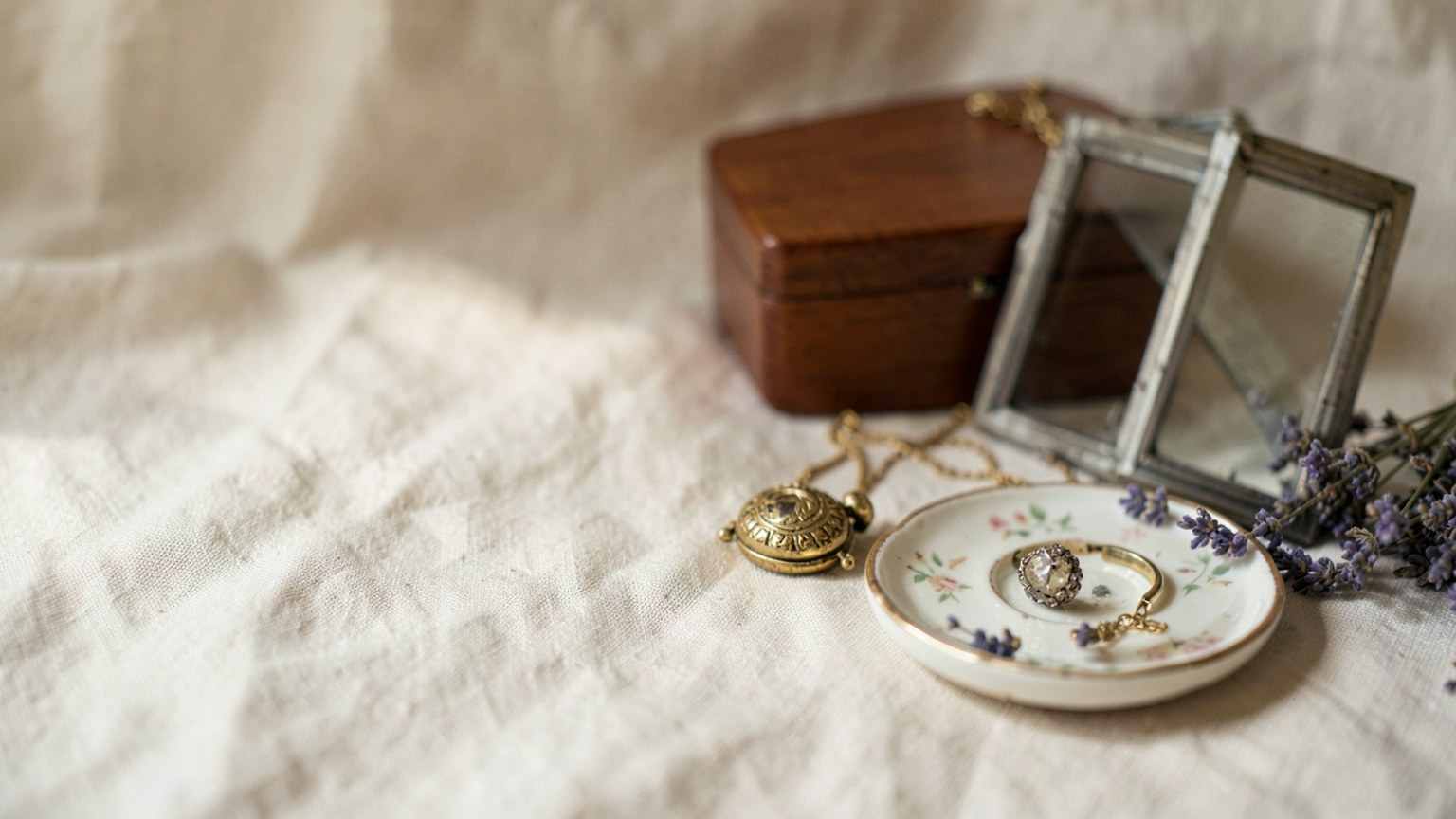
People are often a little embarrassed when they write to me about an object. A ring from a grandmother they never got on with. A mirror from a market stall that nobody wants to hang. A box of a parent’s things that sits unopened in the hall. They ask, half laughing, whether it is silly to feel uneasy about a thing.
It is not silly at all. In more than twenty years of clearing, objects are some of the most common things people send me.
Can objects hold energy?
Yes. Objects that were worn, used or loved for years can carry something of their owner’s feelings, much as a room can. Happy feelings stay too, which is why some heirlooms feel warm and comforting to hold. The heavy ones are usually things that were close to someone through a hard time.
This is not something to fear. An object cannot harm you. But if a piece makes you uneasy every time you see it, that feeling is worth listening to, and it can be lifted.
Which objects carry the most energy?
The things we keep closest carry the most: jewellery worn against the skin, watches, beds, favourite chairs, mirrors, letters and photographs. Objects from a difficult time in someone’s life, a long illness, a divorce or a loss, often feel heavier than objects from happy years.
Antiques and second-hand finds can carry the story of people you will never know. Most of the time that story is ordinary and gentle. Occasionally it is not, and you feel it.
What are the signs that an object feels heavy?
People describe a piece they keep putting away, one that makes a room feel different, or one they feel uneasy wearing or touching. Sometimes there is no sign at all, just a quiet sense that they would rather it was not in the house.
Trust that feeling, without making a drama of it. Often it simply means the object needs a little care before it can belong to you.
How do you cleanse an object yourself?
Clean it as you would anyway, then give it fresh air and daylight: a day on a sunny windowsill, or an hour outside on a dry day. Hold it, thank the person it belonged to, and say in your own words that only love stays with it. That is enough for most things.
Sound helps too. Ring a small bell or a singing bowl over the piece, or set it beside a candle for an evening while you sit quietly with it. For furniture, wipe it down, air the drawers, and do the same in the room it lives in. My guide on clearing the energy in your home explains how.
Should you use salt or water on jewellery and stones?
Be careful. Salt and salt water can damage many metals, pearls, opals, amber and soft or porous stones. Rather than soaking a piece, set it on a dry cloth beside a small bowl of salt overnight. Never put antiques or anything glued, painted or gilded into water.
Moonlight and daylight are gentler choices for precious things. Do not leave coloured stones in strong sun for long, as some will fade.
Should you keep it, or let it go?
You do not have to keep anything out of guilt. If you love a piece, cleanse it and enjoy it. If you do not, you can pass it on with love to someone who will use it, sell it, or give it to a charity shop. Letting go of a thing is not letting go of a person.
Many people choose to keep one small piece that holds a happy memory, and release the rest. That is often the kindest choice for everyone, including the person it came from.
When should you ask for help?
Ask for help when a piece still feels heavy after you have cleansed it, when it came from a very painful time, or when you have a whole home of inherited things to sort through. That is the work I do most often for families after a loss.
I clear objects at a distance. You send me a clear photo and a few lines about where the piece came from. I clear it, sometimes in stages, and write to you about what I found and how to care for it. You can see the prices for one object, an heirloom set or a whole home of inherited things.
If you are unsure, send me the photo first and ask. I will tell you plainly whether I think it needs clearing at all.

About the author
I am a spiritual healer and Usui Reiki Master Teacher with over twenty years of practice, and more than twenty years with the Spirit Release Forum. I hold an MA with Distinction, and today I work entirely at a distance, with clients on four continents.