I have practised Reiki for over twenty years and taught it to Master level, and “what is Reiki?” is still the question people ask me most. In this guide I want to answer it plainly: where Reiki comes from, what happens in a session, what people feel, how distance Reiki works, and how you can learn it yourself.
I will also tell you what Reiki is not, so you know exactly what to expect.
What does the word Reiki mean?
Reiki is a Japanese word made of two parts. Rei is often translated as spiritual or universal, and ki as life energy, the same idea as qi in Chinese practice or prana in yoga. Put together, Reiki means something like “spiritually guided life energy”.
The idea behind it is simple. Life energy flows through every one of us. When that flow is strong and even, we feel well and like ourselves. When it is blocked or depleted, by a hard stretch, a loss, a shock or years of carrying too much, we feel heavy, tired and out of balance. A Reiki practitioner does not use their own energy. They act as a channel, and the energy goes where it is needed.
I always tell my clients this: the healing is not mine. It comes through me. That is why I charge for my time and my written notes, never for a promised result.
Where does Reiki come from?
Reiki was developed by Mikao Usui in Japan. According to the memorial stone his students raised in 1927, it came to him in March 1922, at the end of a twenty-one day retreat of fasting and meditation on Mount Kurama, north of Kyoto. That same year he opened a school and clinic in Tokyo.
When the Great Kanto earthquake struck Tokyo in 1923, Usui and his students gave Reiki to a great many people affected by it, and his reputation spread. Before he died in 1926, he had taught more than two thousand students and trained a small number of teachers.
One of those teachers was Chujiro Hayashi, a retired Japanese naval officer. Hayashi opened his own clinic in Tokyo and gave the practice the structure many of us still use, including a clear set of hand positions and the idea of several practitioners working on one person together.
In 1935 a young woman from Hawaii, Hawayo Takata, came to Hayashi’s clinic. She trained with him, became a Master in 1938, and took Reiki back to Hawaii. Over the next forty years she taught it across the United States, and before her death in 1980 she trained twenty-two Master Teachers. Almost every Reiki practitioner in the West today, me included, can trace their lineage back through Takata and Hayashi to Usui.
My own lineage runs from Dr Usui through my teachers, Andrew and Helen Hain. When you look for a practitioner or a teacher, it is always fair to ask about theirs.
What are the five Reiki principles?
Usui gave his students five simple principles to live by, each beginning with “just for today”. They are the heart of the practice, and many of us say them every morning. Translations vary a little. This is how I teach them:
- Just for today, I will not be angry.
- Just for today, I will not worry.
- Just for today, I will be grateful.
- Just for today, I will do my work honestly.
- Just for today, I will be kind to every living thing.
They look easy. They are not. “Just for today” is the wise part: nobody can promise to never worry again, but anyone can try for one day.
What happens in a Reiki session?
In a Reiki session you rest, fully clothed, while the practitioner channels energy to you. In person, their hands rest lightly on or just above you. At a distance, they work from where they are while you rest at home. A session usually lasts about an hour, and nothing is done to you that you have not agreed to.
Because I work entirely at a distance now, this is how a session with me runs:
- We talk first. On a video call, or by message for a sent session, you tell me what is happening and what you would like to feel.
- You rest. You lie down somewhere quiet and comfortable. On a live call you can keep the camera on or off.
- I work. I tune in to you and channel Reiki for the length of the session. Some people drift off to sleep, which is perfectly fine.
- You receive written notes. The same day, I send you what I sensed, where the energy felt blocked, and a few simple things to do in the days after.
Drink some water afterwards and be gentle with yourself for the rest of the day.
What does Reiki feel like?
Most people feel warmth, tingling, a heaviness in the arms and legs, or a deep calm. Some see colours, some feel emotional, and some fall asleep. Others feel very little at the time and notice a change over the following days. All of these are normal.
In twenty years I have learned not to predict what anyone will feel. Two people in the same family can have completely different sessions. What I hear most often afterwards is that people feel calmer and lighter than they have in a long time.
If you feel nothing at all, that does not mean you did it wrong. Reiki is a spiritual practice, so nobody can promise you a particular experience, and I never will.
How does distance Reiki work?
Distance Reiki, also called absent healing, is Reiki sent to someone who is not in the same room. It is taught at Level 2, using a symbol for connecting across distance, and it has been part of Reiki from the very beginning. For me, distance makes no difference to the energy.
I tune in to you through your name, your photograph and what you have told me. You can be with me live on a video call, or I can send the healing at a time we agree while you rest or sleep. Distance Reiki is now most of my work, with clients in the UK, Europe, the United States, the Middle East and Australia.
People often ask me how this can possibly work. My answer is that I can tell you what I do and what my clients describe, but I cannot prove it to you the way a scientist would prove something in a laboratory. The best way to know is to try one session and see for yourself.
Distance Reiki also makes it possible to send healing to someone you love, as long as they have agreed to it, to a child with a parent’s consent, and to animals. I always ask the person’s higher self for permission before I begin.
What can Reiki help with, and what can’t it?
Reiki is spiritual support for relaxation and wellbeing. It is not a medical treatment, and it does not cure, diagnose or treat any illness or condition. It works alongside your doctor or therapist, never instead of them.
People come to me for Reiki when they are going through a hard stretch and want to feel calmer and more like themselves; around a big life event such as an operation, exams, a birth, a move or a loss; when they want healing sent to a child, a parent far away or an ageing pet; or simply because they are curious and want to try it.
What about the research? It is small and mixed. Reviews of the studies so far have not found the evidence strong enough to say that Reiki treats any condition, and I do not claim that it does. What the studies and my clients both describe is that people find it relaxing, and that matters. If anyone ever tells you Reiki will cure you, or that you should stop a medicine or a treatment, please walk away.
If you are unwell, keep seeing your doctor. If you are struggling with your mood or your safety, please see my page on when to seek other help first.
How do you learn Reiki?
Reiki is passed from teacher to student through an attunement, a short ceremony that opens you to the energy. It is usually taught in levels: Level 1 for yourself, Level 2 for others and at a distance, and Master level for teaching.
- Level 1 is Reiki for yourself. You learn the history, receive your first attunement, learn the hand positions and begin a daily practice.
- Level 2 is Reiki for others and at a distance. You learn the symbols, how to send healing across any distance, and you practise with feedback.
- Master level is for those who want to teach. In my courses, Levels 3 and 4 are taught together in one course, so you become a Master practitioner and teacher at the same time.
I have attuned more than a hundred people, about a dozen of them to Master. Once, teaching in Greece, I attuned more than fifty people in a single day. Since 2020 I have taught online, live, one-to-one or in small groups. If you would like to learn, you can see my Reiki training courses, with every price published.
Leave at least three weeks of daily practice between levels, so each one has time to settle. There is no rush.
How do you choose a Reiki practitioner?
Choose someone who can tell you their training and lineage, publishes their prices, explains what they do in plain words, and leaves you feeling calmer. A good practitioner will always tell you to keep seeing your doctor.
Here are the questions I would ask anyone, including me:
- Who trained you, and to which level?
- What does a session cost, and is that price fixed before we start?
- What will I receive afterwards?
- What happens if I want to cancel?
A good practitioner will answer every one of these happily, give you time to decide, and encourage you to keep seeing your doctor. I have written down how I work as my promise to every client.
Is Reiki right for you?
The simplest way to find out is to try one session. You do not need to believe anything first, and you do not need to travel. All you need is a quiet place to rest for an hour.
If you would like to try, you can book a distance Reiki session with me, live on video or sent while you rest. If you are not sure whether Reiki is what you need, or whether something else would suit you better, take the two-minute check, or simply send me a message. I reply personally, usually within a day.
About the author
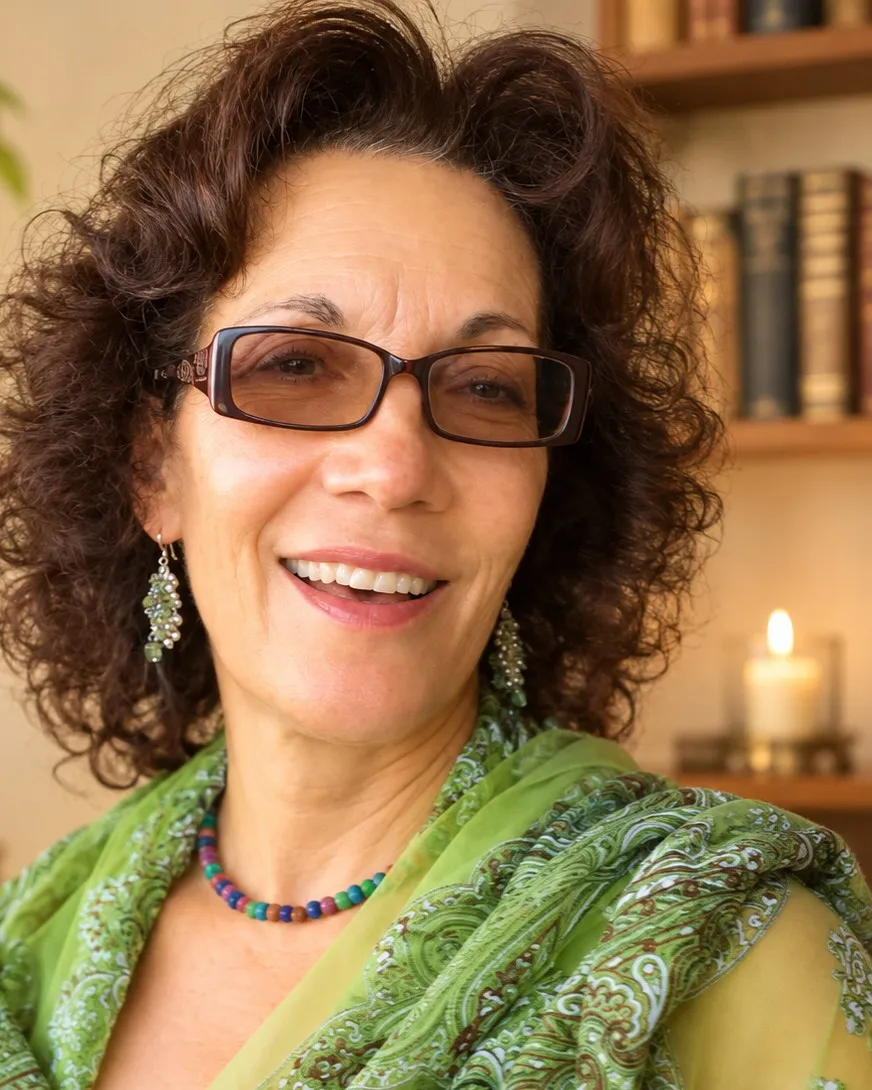
I am a spiritual healer and Usui Reiki Master Teacher with over twenty years of practice, and more than twenty years with the Spirit Release Forum. I hold an MA with Distinction, and today I work entirely at a distance, with clients on four continents.